


How the Spanish Folding Hand Fan Became an Icon of Elegance
All you need to know about the history of the the folidng fan.
The History of the Abanico
The story of the fan begins in the East, with early origins traced to ancient Korea and later China. In the 15th century, European voyagers brought these exquisite objects back from their travels, introducing a new accessory that would soon sweep across the continent.
By the 18th century, under the opulent courts of Louis XIV and Louis XV, the fan transformed from a practical cooling device to a statement of luxury. Crafted from fine Italian silks, adorned with precious stones, and embroidered with gold, it became an essential emblem of refinement.
Diego Velázquez - The Lady with a Fan c.1640
Spain embraced the art form in the 17th century, when master craftsmen began producing fans of exceptional beauty.
Celebrated painters were commissioned to decorate them for nobility — as immortalised in La dama del abanico by Diego Velázquez, where the fan appears as both accessory and symbol of status.

Edgar Degas - Dancer with a Fan c.1880
This study is of the central figure in Degas's Dancers in the Classroom, about 1880. The dancer is at least twice as large as she appears in the final painting. The shapes she makes emphasise the rhythms of the open fan along with her flared tutu.

Allen & Ginter Cigarettes Trade Cards
Allen & Ginter Cigarettes released a series of trade cards (1889) featuring a wide range of fans, showing how “fanmania” had spread to the United States. The advertisements targeted fashionable women, linking fans and European style with modern sophistication. At a time when cigarette production was rising and female smoking was still socially controversial, these cards appealed to ideas of status, fashion, and cosmopolitan identity.

5 Traditional fans designed by artists
Fan Design with Views of Mount Vesuvius and the Tomb of Virgil, 1779
As travel became more common in the eighteenth and nineteenth centuries, fans were popular souvenirs. In Italy, especially Naples, artists created hand-painted fans for Grand Tour travelers, often featuring Mount Vesuvius. Many tourists bought unmounted fan leaves to assemble later, which is why museums today hold both mounted and unmounted examples.

Camille Pissarroca - The Cabbage Gatherers c.1878–79
This early fan by Camille Pissarro, likely shown in the 1879 Impressionist exhibition, depicts agricultural women working in the fields. Encouraged by Edgar Degas, Pissarro produced many fans between 1878 and 1895, sometimes for financial reasons, though the format also interested him formally.

Henri-Gabriel Ibelsca - Circus Fan c.1893–95
Henri-Gabriel Ibels, a member of the Nabis group, used the fan to explore everyday bourgeois culture and formal experimentation. His lithograph on silk also reflects influence from Japanese design, especially in its use of empty space. The red ring of Paris’s Cirque Fernando shapes this fan’s composition, with performers arranged like a curtain call.

Chemins de Fer de l'Ouest, Sur La Plage
In the late nineteenth century, French railway companies used fans to advertise travel and holiday destinations. Designed by Théophile-Alexandre Steinlen, this fan promotes discounted seaside excursions and features women relaxing by the shore. Its creative design uses a flowing white dress to shape the fan’s lower edge, an effect most visible in the unmounted version.

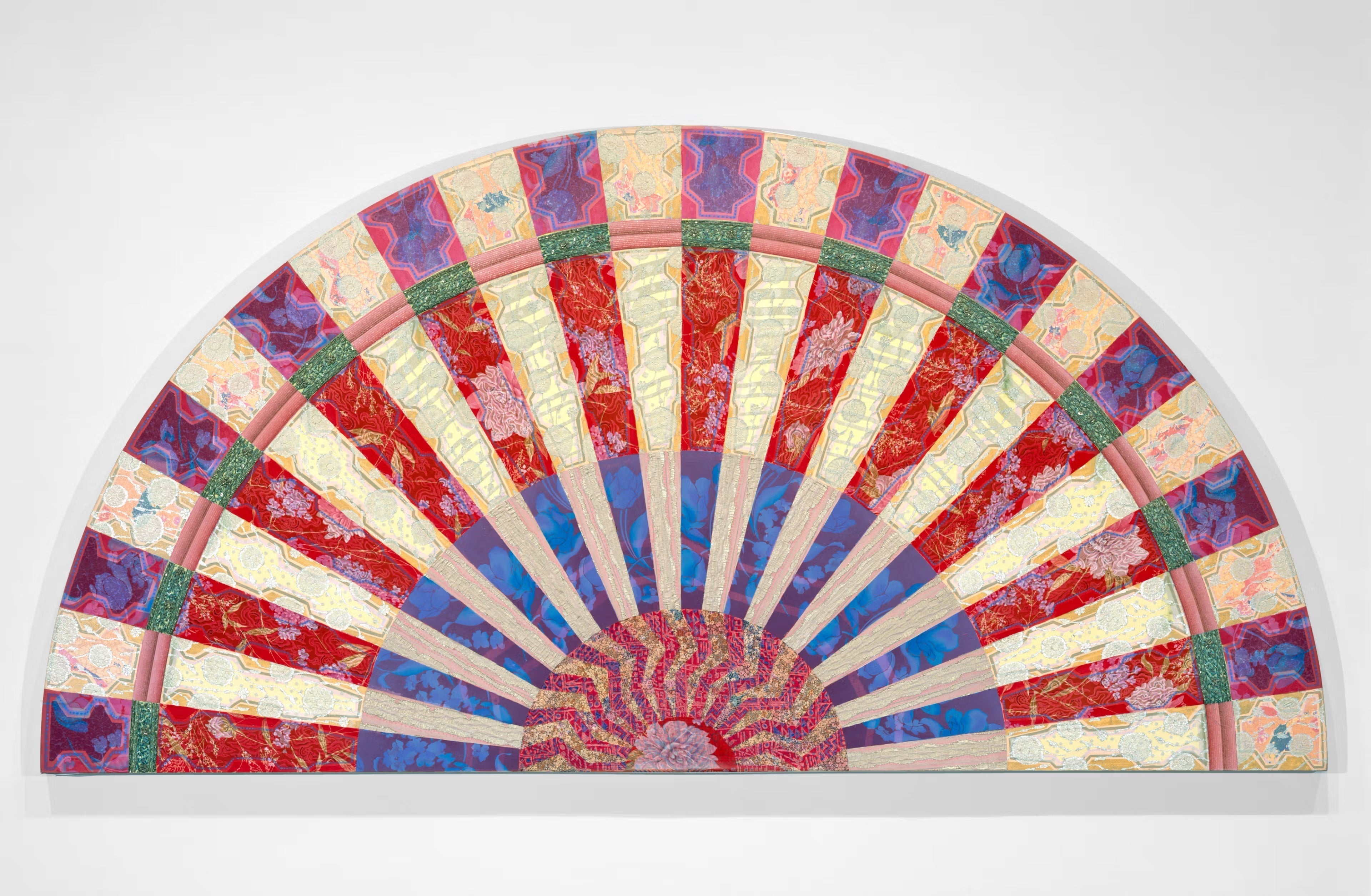
Miriam Schapiro - Barcelona Fan, 1979
Miriam Schapiro was a key artist in the Pattern and Decoration movement, using craft materials and decorative forms to challenge traditional ideas about art and celebrate women's experiences. In Barcelona Fan (1979), she combined fabric, lace, and paint in her signature "femmage" style, transforming a traditional fan into a large-scale feminist symbol of strength and empowerment.

FARFALLA AND FARFALLO
Farfalla (feminine, plural: farfalle) is the Italian word for butterfly.
Farfallo, though not formally a word, imagines its masculine counterpart.

Each abanico is handcrafted in Spain by skilled artisans who have been creating abanicos for generations.

The wooden ribs are handcarved, leavin the trace of human touch/

Championing small batches and acknowledging tradition.
Not just a fan, an abanico
People Also Read
Stylish and Elegant Looks for Summer Wedding Guests
Wedding guesting can be challenging, especially when the wedding is abroad. Here are the top things to pack to ensure that you always look stylish no matter the weather.
Have Any Questions?
We are here to answer all of your queries